
Microplastics in the Kitchen: How Everyday Plastic Tools Can End Up in Your Food
Learn how plastic utensils, cutting boards, colanders, and food containers release microplastics into food—and simple swaps to reduce exposure.
ALL POSTS
1/3/20263 min read
Microplastics in the Kitchen: How Everyday Plastic Items Affect Your Food
Most people don’t think twice about the plastic items they use in their kitchens every day. Plastic spatulas, food storage containers, cutting boards, and colanders are convenient, affordable, and familiar. But growing scientific evidence suggests these everyday items may be a significant source of microplastic exposure—especially when they’re exposed to heat, friction, and food.
This isn’t about fear or conspiracy theories. It’s about what current research is showing and how small, thoughtful changes in the kitchen can help reduce unnecessary exposure over time.
What Are Microplastics?
Microplastics are extremely small plastic particles—often smaller than a grain of rice and usually invisible to the naked eye. They form when plastic breaks down due to heat, friction, UV light, or repeated use. In the kitchen, plastic is routinely exposed to all three: high temperatures, scraping and stirring, and frequent washing.
When plastic items shed these tiny particles, they don’t just disappear. Many end up in the food we eat.
Where Microplastics Are Found
Scientists have now detected microplastics almost everywhere they’ve looked. Peer-reviewed studies have identified them in:
Drinking water
Food
Indoor and outdoor air
Soil
Oceans
More concerning, microplastics have also been found in human blood, lungs, and placentas. These findings have been replicated in multiple studies around the world, which is why researchers increasingly emphasize exposure reduction—especially in places where we can control it, like the kitchen.
Why the Kitchen Matters
The kitchen is one of the highest-risk areas for microplastic exposure because of three key factors:
Heat accelerates plastic breakdown, causing more particles to be released.
Friction from stirring, scraping, cutting, and washing wears plastic down over time.
Food absorbs microplastics easily, particularly when it’s hot or moist.
In other words, the exact conditions of cooking and food prep are ideal for plastic shedding.
Common Kitchen Items That Shed Microplastics
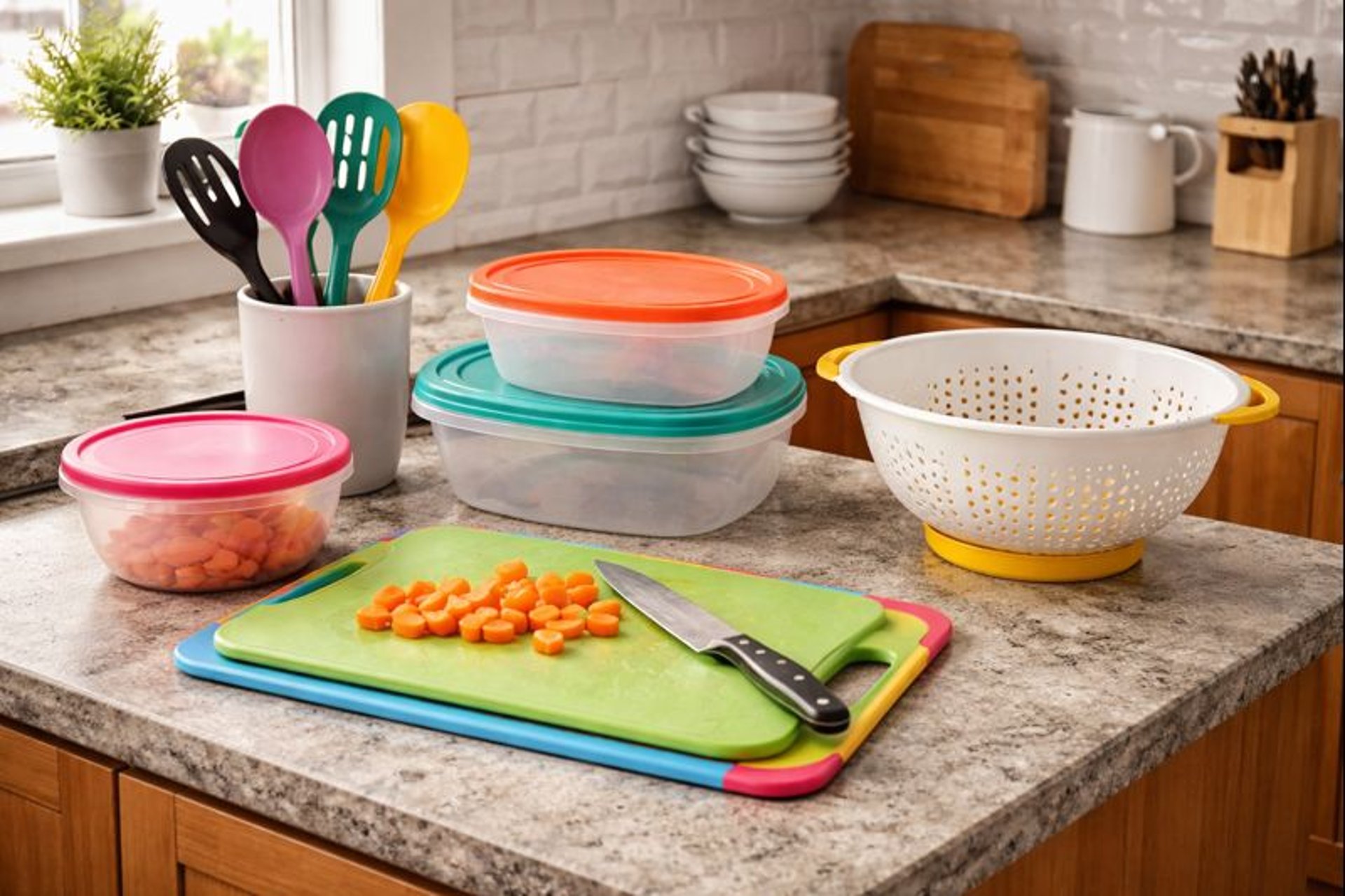
Plastic cooking utensils such as spatulas and spoons release microplastics when heated and scraped against pans. Many people have seen visible plastic bits peeling off the edges. What we don’t see are the far smaller particles that break away and end up in the food. Studies show that hot food increases the rate at which these particles are released. Wooden utensils, stainless steel, or high-heat-rated silicone are safer alternatives.
Plastic colanders and strainers are another overlooked source. Hot pasta combined with friction creates ideal conditions for microplastic release, and those particles can be absorbed by food almost instantly. Stainless steel colanders are inexpensive, widely available, and extremely durable.
Plastic food storage containers, including well-known brands, can shed microplastics and leach chemicals when heated. Even containers labeled “microwave-safe” are not particle-free—this label simply means the plastic won’t melt. Glass or ceramic containers with lids are a safer long-term option and are easy to find in affordable sets.
Plastic cutting boards release plastic fragments with every cut. The visible cut marks are evidence of plastic being removed—and the smallest pieces end up directly on the food. Wooden cutting boards, properly maintained with occasional mineral oil and hand washing, are a safer and long-lasting alternative.
Finally, old, scratched, cloudy, or warped plastic containers shed far more microplastics than new ones. Visible wear is a sign the material is actively breaking down. Replacing these items not only reduces exposure but also helps declutter kitchen cabinets.
What Science Says About Health
Researchers are still studying the long-term effects of microplastics on human health, but several findings are consistent:
Microplastics can cause inflammation in laboratory and animal studies
They can carry toxic chemicals
They accumulate in organs rather than simply passing through the body
Because of these uncertainties, many scientists agree that reducing exposure—especially in high-contact areas like the kitchen—is the most practical approach.
A Calm, Practical Approach
This isn’t about perfection or replacing everything overnight. It’s about making better choices as items wear out. Homemaking has always been about protecting the home quietly and wisely. Reducing microplastics in the kitchen is simply a modern extension of that tradition—one small, thoughtful step at a time.